In today’s rapidly advancing high-speed drive technology, high-speed servo motors and high-speed asynchronous motors, as two important types of high-speed rotating equipment, are playing key roles across many industries.
Many engineers, procurement specialists, and business owners often ask: “What are the real differences between these two types of high-speed motors? How should I choose between them?”
This article will provide a comprehensive analysis of their core differences, performance comparisons, advantages and disadvantages, and, combined with real application scenarios, help you make a more scientific and professional selection decision.
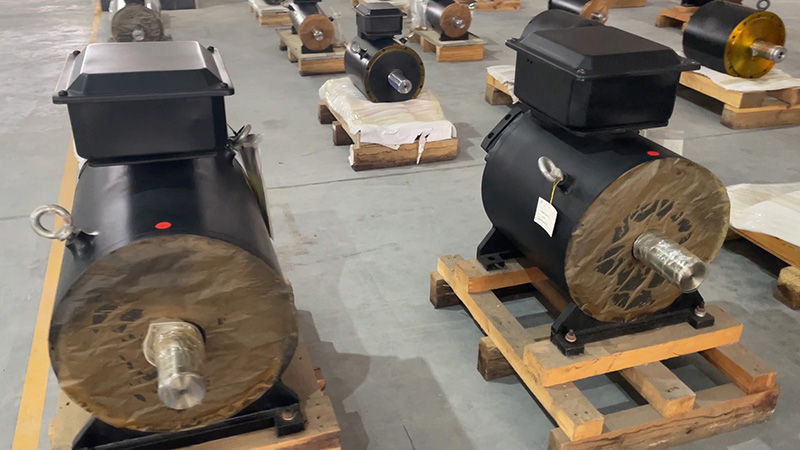
In today’s rapidly advancing high-speed drive technology, high-speed servo motors and high-speed asynchronous motors, as two important types of high-speed rotating equipment, are playing key roles across many industries.
Many engineers, procurement specialists, and business owners often ask: “What are the real differences between these two types of high-speed motors? How should I choose between them?”
This article will provide a comprehensive analysis of their core differences, performance comparisons, advantages and disadvantages, and, combined with real application scenarios, help you make a more scientific and professional selection decision.
4. Structural Comparison: Permanent Magnet vs. Induction (Asynchronous)
| Item | High-Speed Servo Motor | Asynchronous High-Speed Motor |
|---|---|---|
| Rotor Type | Permanent magnet (NdFeB) | Aluminum or copper bars (squirrel cage) |
| Control Method | Closed-loop control system (with encoder) | Open-loop or simple closed-loop (current feedback) |
| Starting Method | Precise control via servo drive | Direct start or inverter-driven |
| Cooling Method | Combination of air cooling + oil cooling / water cooling | Mainly air cooling, optional water cooling |
5. Performance Comparison: Speed, Precision, and Response Capability
1. Speed Capability
- High-speed servo motors: can easily exceed 30,000 rpm or even higher
- Asynchronous high-speed motors: typically operate in the range of 10,000–20,000 rpm
2. Start-up Response
- Servo systems feature fast start/stop performance with millisecond-level response time
- Asynchronous motors have higher inertia and slower response
3. Control Accuracy
- Servo motors can achieve positioning accuracy within 0.01°
- Asynchronous motors cannot directly achieve positioning control
6. Energy Efficiency and Thermal Management Comparison
High-speed motors generate significant heat during operation, making cooling capability critical.
High-speed servo motors are typically equipped with active cooling systems such as oil cooling or water cooling, enabling stable operation under high-speed and high-frequency conditions.
Asynchronous high-speed motors feature a compact structure and rely mainly on air cooling or enhanced fan designs, but thermal degradation may occur more quickly.
At the same time, servo motors offer higher energy efficiency and provide clear advantages in energy saving under high-frequency start-stop operating conditions.
Cost and Maintenance Differences
| Item | High-Speed Servo Motor | Asynchronous High-Speed Motor |
|---|---|---|
| Purchase Cost | High (due to materials + control system) | Relatively low |
| Control System | Requires high-performance servo drive | Standard inverter is sufficient |
| Maintenance Frequency | Low; high precision; long service life | High; faster bearing wear |
| Cost–Benefit Ratio | Better in long-term performance | Lower initial investment |
8. Typical Application Scenarios Comparison
High-Speed Servo Motor Applications
- Aerospace testing equipment
- New energy vehicle drive systems
- High-precision machine tool spindles
- Semiconductor processing equipment
- Laser cutting / precision engraving equipment
Asynchronous High-Speed Motor Applications
- Large fans / blowers
- Centrifugal compressors
- Oil and gas pipeline pumps
- High-speed winding in paper / textile industries
- Industrial ventilation systems
9. Service Life and Operational Stability
Due to high control precision and lightweight rotor design, high-speed servo motors can achieve a service life of 20,000–30,000 hours or more under proper operation, with low vibration and noise.
Asynchronous high-speed motors, although structurally robust, experience faster bearing wear under high-frequency operation, resulting in slightly lower service life and operational smoothness.
10. Selection Recommendations: How to Choose the Right Motor
Key selection guidelines for engineers and procurement teams:
- High precision control + frequent start/stop: Choose high-speed servo motors
- Long continuous operation + cost-sensitive applications: Prefer asynchronous high-speed motors
- Limited installation space: Servo motors offer more flexible sizing options
- Existing inverter-based control system: Asynchronous motors are more economical to integrate
11. Future Trend: Are Servo Systems Replacing Asynchronous Motors?
With advancements in permanent magnet materials and servo drive technologies, high-speed servo motors are rapidly replacing traditional asynchronous motor applications.
In particular, in high-end markets such as smart manufacturing, automation equipment, and electric vehicle power systems, servo motors have become the mainstream choice.
However, asynchronous high-speed motors still maintain a strong market presence, especially in traditional industrial applications, energy-saving upgrades, and low-maintenance-demand scenarios.
Conclusion: Understand the Differences and Choose the Right Motor
Through a comprehensive comparison of high-speed servo motors and asynchronous high-speed motors in structure, performance, application, control, lifespan, and cost, this article aims to help you clearly identify their respective strengths and suitable use cases.
Choosing the right high-speed motor not only improves system efficiency but also significantly reduces maintenance costs and energy consumption.
If your company is undergoing automation upgrades or building high-speed rotating systems, it is recommended to first evaluate application requirements and control system capabilities before deciding between servo or asynchronous solutions.
For professional customization support, you may contact Hangzhou Mosen Electromechanical Technology Co., Ltd., and we will provide tailored, efficient, high-speed, and safe motor drive solutions..