1. Customer Background
Automotive hinges are critical connecting components in vehicle door systems, directly affecting the stability of door opening and closing, durability, and overall user experience of the vehicle.
In real-world operation, automotive hinges are subjected to long-term repetitive mechanical impacts, load variations, and environmental temperature changes caused by frequent door opening and closing. In particular, in extremely cold northern regions, high-temperature sun-exposed environments, and other complex climate conditions, the material strength, lubrication condition, and structural stability of hinges can all be affected.
Therefore, automotive component suppliers and OEMs typically need to conduct fatigue resistance testing under high and low temperature conditions before mass production. This simulates the long-term repetitive opening and closing of automotive hinges under different temperature environments to verify their reliability and service life.
The customer in this project is primarily an automotive component testing equipment manufacturer. The final equipment is used for fatigue performance testing of automotive hinges, which places high requirements on the environmental adaptability, long-term operational stability, and on-site delivery capability of the motor system.
2. Project Challenges
1. Requirement to operate in a -40°C to +80°C temperature range
The automotive hinge testing equipment must operate continuously inside environmental test chambers to simulate extreme cold and high-temperature conditions.
Conventional servo motors are prone to issues in low-temperature environments, such as increased grease viscosity, startup difficulties, encoder signal abnormalities, and hardening of sealing materials. In high-temperature environments, problems such as excessive temperature rise, insulation aging, and performance degradation may occur.
Therefore, the motor must have excellent wide-temperature adaptability and be able to operate stably within a range of -40°C to +80°C.
2. High repetition frequency and strict stability requirements
Automotive hinge fatigue testing is not a single motion but requires a large number of repeated opening and closing cycles.
The equipment must operate continuously for long periods, placing high demands on the compatibility between the motor, drive system, reducer, and electric cylinder. If system stability is insufficient, it may lead to test interruptions, data deviations, and even delays in customer equipment delivery schedules.
3. Structural design issues requiring on-site optimization support
During commissioning, certain structural design flaws in the customer’s equipment affected the stability and performance of the test motion.
Such issues cannot be solved simply by replacing the motor. Instead, they require the supplier to have strong on-site diagnostic capability and system application experience, enabling analysis from multiple perspectives such as motor selection, transmission matching, mechanical structure, and load conditions.
4. Tight delivery schedule requiring rapid technical response
The customer’s equipment was in the delivery phase, and on-site commissioning time was limited. Any delay in problem identification would directly affect the overall delivery schedule of the test system.
Therefore, this project required not only highly reliable products, but also strong on-site technical support capabilities to assist the customer in completing debugging and final delivery as quickly as possible.
3. Application Solution
For the operating conditions of the automotive hinge fatigue testing system, SENYD provided a motion control solution designed for high and low temperature environments.
Core configuration is as follows:
| Comparison Item | Ordinary Motor | Vacuum Motor |
|---|---|---|
| Cooling Method | Fan cooling; not suitable for vacuum environments | Heat conduction + thermal radiation; optional liquid cooling; specially designed for vacuum heat dissipation |
| Outgassing Condition | Continuously releases gases, causing contamination | Low-outgassing materials + pre-baking; extremely low outgassing rate |
| Lubrication | Yes; may suffer from cold welding or wear | No; uses vacuum-compatible lubrication and ceramic bearings |
| Typical Applications | Machine tools, pumps, household appliances, standard production lines | Vacuum coating equipment, semiconductor equipment, aerospace, laboratories |

5. On-site Technical Support
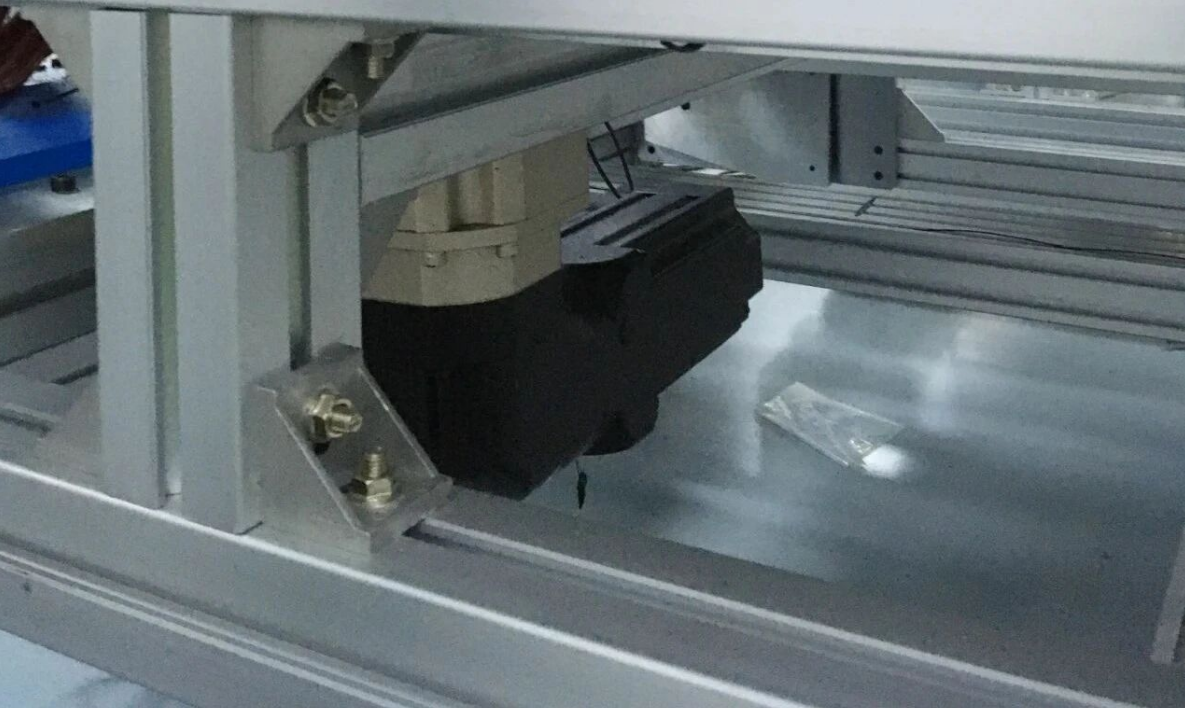
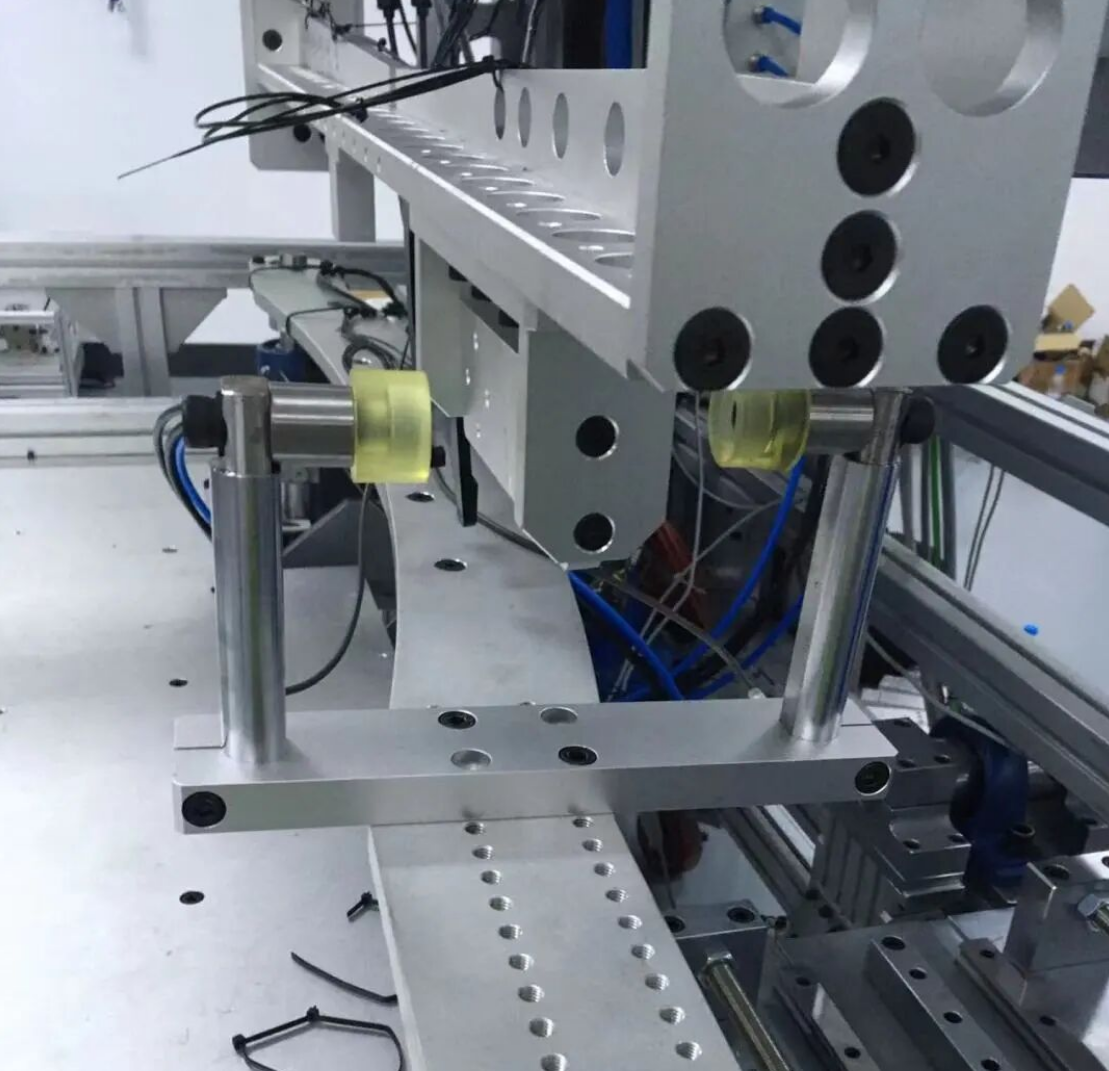
During the commissioning phase of the project, the SENYD technical team visited the customer’s site to inspect the operating condition of the equipment.
During on-site troubleshooting, we identified certain structural design issues in the customer’s equipment that affected the stability of the motion system and the consistency of the test actions. The technical engineers analyzed the problem from multiple aspects, including motor load conditions, transmission structure, installation method, and motion trajectory, and assisted the customer in making adjustments and optimizations.
With on-site technical support, the customer successfully resolved key issues during equipment commissioning and accelerated the overall system delivery process.
6. Solution Advantages
1. Strong adaptability to high and low temperature environments
The SENYD 0632 series high & low temperature servo motors can operate in environments ranging from -40°C to +80°C, making them suitable for durability testing equipment for automotive components under extreme temperature conditions.
Compared with conventional servo motors, high & low temperature servo motors are better suited for special environmental applications in terms of material selection, sealing structure, low-temperature startup performance, and operational stability.
2. Stable servo control, ideal for fatigue testing applications
Automotive hinge fatigue testing requires a large number of repetitive motions and places high demands on system consistency.
This solution adopts a combination of servo motors, drives, gear reducers, and electric cylinders to achieve stable reciprocating motion control, meeting the requirements of hinge opening and closing tests in terms of motion frequency, operational stability, and repeat positioning accuracy.
3. High compatibility between motor and transmission system
This project does not simply provide a single motor, but delivers a complete system solution tailored to the customer’s equipment requirements, covering the entire chain from power output to motion execution.
The SENYD high & low temperature servo motor, combined with MOLES reducers and MOLES electric cylinders, reduces the customer’s workload in multi-brand selection, system matching, and debugging, while improving overall system integration efficiency.
4. Strong on-site service capability to solve practical problems
In real equipment delivery scenarios, issues often do not originate solely from the motor itself, but may also be caused by structural design, installation methods, load variations, or transmission mismatches.
In this project, SENYD not only provided products but also delivered on-site technical support, helping the customer identify structural design defects and providing optimization suggestions, enabling faster equipment commissioning and delivery.
5. Suitable for long-term operation in automotive testing equipment
This solution is suitable for high and low temperature durability testing systems for automotive components such as hinges, door locks, sealing strips, and door mechanisms.
For equipment operating continuously inside environmental chambers with repeated motion cycles, this solution provides stable and reliable power and transmission support.
7. Application Value
Through this project, the customer obtained not just a single motor, but a complete high & low temperature motion control solution for automotive component durability testing.
The solution enabled:
- Operation in -40°C to +80°C environments
- Repetitive fatigue testing of automotive hinge opening and closing
- Integrated servo motor, drive, reducer, and electric cylinder system
- On-site troubleshooting and structural optimization support
- Shortened commissioning cycle and improved delivery efficiency
8. Extended Application Scenarios
This high & low temperature servo solution is not only suitable for automotive hinge fatigue testing, but also applicable to a wider range of automotive component environmental reliability test systems, such as:
- Automotive door lock durability testing systems
- Automotive door sealing strip testing equipment
- Automotive door handle fatigue testing systems
- Automotive seat slide rail testing systems
- New energy vehicle component temperature testing systems
- Door opening/closing durability test rigs
- Automated testing systems inside environmental chambers